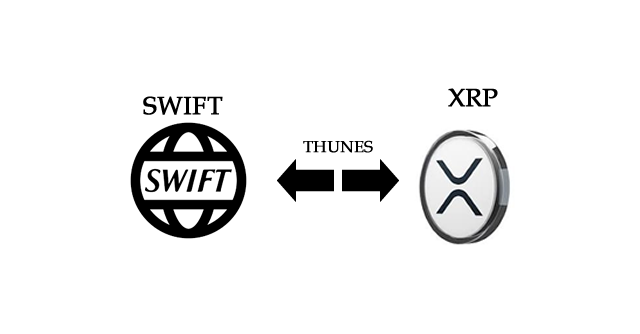
What Thunes announced: The company's Pay-to-Stablecoin-Wallets solution — originally launched in October 2025 — is now accessible to all 11,500 institutions on the SWIFT network through their existing SWIFT connectivity. No additional integration is required.
What it enables: Any SWIFT-connected bank can now instantly pay into USDC or USDT stablecoin wallets across 140+ countries, 24 hours a day, 7 days a week.
What powers it: Thunes' Direct Global Network — which itself runs on Ripple's blockchain-powered payment infrastructure and its own SmartX Treasury System for fiat-to-stablecoin liquidity management.
The Problem: Why SWIFT Is Broken for the Modern Economy
Before understanding why this announcement matters, you need to understand what it is replacing. SWIFT — the Society for Worldwide Interbank Financial Telecommunication — is not a payment system. It is a messaging network. It sends instructions between banks. The actual movement of money happens through a pre-digital architecture called correspondent banking, built on a system of "nostro" and "vostro" accounts that is centuries old and never designed for the speed, volume, or accessibility demands of 2026.
The result is a set of structural problems that impose real costs on real people every single day — particularly in emerging markets where the friction is worst and the stakes are highest.
McKinsey reports large corporates pay 1–3% of transaction value for B2B cross-border payments. SMEs pay over 5%. Remittances still cost an average of 6.2% to send $200. The financial industry spends an estimated $1.6 billion annually just investigating delayed payments.
SWIFT payments typically take 2–5 working days. Even with SWIFT GPI improvements, 80% of a cross-border payment's total journey time occurs after the payment leaves the SWIFT network — the so-called "last mile" that SWIFT itself cannot control.
Senders often cannot track where their funds are. Beneficiaries cannot confirm when funds will arrive. Banks cannot always tell why a payment has been delayed, often requiring 5–10 working days to investigate a single failed or held transaction.
To participate in correspondent banking, banks must pre-fund accounts in every currency they operate across. Estimates put the total capital trapped in nostro and vostro accounts globally at $27 trillion — working capital that could be deployed elsewhere but is instead held idle as settlement collateral.
SWIFT connects 11,500 institutions — but the world has billions of people who receive money through mobile wallets, stablecoin wallets, or informal networks that SWIFT simply does not reach. The last-mile delivery problem is not a technology gap; it is a structural one.
SWIFT operates on banking hours. Weekends, public holidays, and time zone mismatches mean that a payment initiated on a Friday afternoon may not begin processing until Monday morning — in an era when every other digital service is available around the clock.
"The SWIFT messaging and correspondent banking model was built for a pre-digital era. It introduces layers of cost and delay, with cross-border payment flows involving multiple intermediaries and settlement taking up to five business days."
— Cross-Border Payments 2025 Industry Analysis, OpenDue
Meet the Three Players: Thunes, SWIFT, and Ripple
To understand the architecture of what Thunes has built, you need to understand the distinct role each party plays. This is not a replacement of SWIFT. It is an extension of SWIFT's reach into territory it could never access alone — and Ripple is the infrastructure layer that makes it work.
SWIFT provides the messaging infrastructure that connects 11,500 financial institutions in 200+ countries. It is the established communication standard that virtually every major bank uses. SWIFT does not move money — it sends instructions. Its role here: provide the trusted, familiar entry point that banks already use, requiring zero new integration from their side.
Thunes operates the Direct Global Network — a proprietary payments infrastructure connecting to 12 billion mobile wallets, stablecoin wallets, and bank accounts worldwide, plus 15 billion cards via 220+ payment methods. Members include Uber, Deliveroo, WeChat, and Grab. Its role: receive SWIFT messages from banks and route payments to any endpoint, including stablecoin wallets, in real time.
Ripple provides the blockchain-powered payments infrastructure that Thunes uses to power its SmartX Treasury System. Ripple Payments has near-global coverage across 90+ payout markets representing 90%+ of daily FX markets, processing over $70 billion in volume. Its XRP Ledger settles transactions in 3–5 seconds. Its role: provide the fast, low-cost settlement rails and liquidity management that enable Thunes to convert fiat to stablecoins and route payments at scale.
How It Works: The Technical Architecture
The elegance of this system is that banks do not need to understand any of the layers beneath SWIFT to use it. From the bank's perspective, they send a SWIFT message — exactly as they always have. What happens next is where the innovation lies.
"Through a single Swift message, any bank can now deliver instant payouts to all key destinations including wallets, banks and stablecoin wallets around the world, without complexity or integration barriers. It's interoperability at its best."
— Elie Bertha, Chief Product Officer, Thunes · March 17, 2026
Old World vs. New World: What Actually Changes
| Traditional SWIFT + Correspondent Banking | Thunes + Ripple via SWIFT Message |
|---|---|
| Settlement takes 2–5 business days | Instant settlement — funds arrive in seconds |
| Fees of 1–6%+ depending on corridor | Dramatically reduced friction costs |
| Available only during banking hours | 24/7/365 — no banking hours restriction |
| Opaque — limited tracking visibility | Full transaction traceability on-chain |
| Requires pre-funded nostro/vostro accounts | No pre-funding required — on-demand liquidity via Ripple |
| Cannot reach stablecoin or mobile wallets | Reaches 500M+ stablecoin wallets + 12B mobile/bank accounts |
| Multiple intermediary hops add cost and delay | Direct routing — no correspondent chain |
| Last-mile friction in 80% of journey time | Thunes handles last-mile delivery natively |
| No weekend or holiday processing | Continuous availability regardless of calendar |
Ripple's Role: Why XRP Is the Infrastructure Layer
The Thunes-SWIFT announcement of March 2026 did not emerge from nowhere. It was built on a foundation that Ripple and Thunes have been constructing together since 2020 — and significantly expanded in September 2025 when the two companies announced a major partnership deepening.
In the September 2025 announcement, Thunes confirmed that it was integrating Ripple Payments into its SmartX Treasury System. This is the core of the arrangement: Ripple's payment infrastructure — which leverages the XRP Ledger and its native digital asset XRP as a bridge currency — powers the liquidity conversion and settlement that underpins every fiat-to-stablecoin transaction Thunes processes.
On-Demand Liquidity (ODL): Ripple's ODL product eliminates the need for banks to pre-fund accounts in destination currencies. Instead of locking up capital in nostro accounts, the SmartX Treasury System uses Ripple's infrastructure to source liquidity on demand — converting fiat to XRP to stablecoin in seconds. Ripple's ODL processed approximately $1.3 trillion in transactions in Q2 2025 alone.
90+ payout markets: Ripple Payments covers more than 90 payout markets representing 90%+ of daily FX market coverage, having processed over $70 billion in volume. This breadth of corridor coverage is what enables Thunes to offer the 140+ country reach that SWIFT banks now access.
ISO 20022 compliance: Ripple's infrastructure is ISO 20022 compliant — the same messaging standard that SWIFT migrated to in November 2025. This technical alignment is part of what makes the Thunes-Ripple-SWIFT integration seamless: all three systems now speak the same financial messaging language.
XRP as bridge currency: While banks transact in fiat and recipients receive stablecoins (USDC or USDT), XRP operates as the intermediate bridge asset in corridors where direct fiat-to-stablecoin conversion is inefficient or unavailable. It settles in 3–5 seconds at a cost of approximately $0.0002 per transaction — a fraction of what correspondent banking charges.
Real-World Use Cases: Who Benefits and How
Abstract financial infrastructure is only as significant as the real human problems it solves. Here are the specific use cases that this architecture directly addresses:
A Filipino overseas worker in the UAE can now have their salary sent by a SWIFT-connected bank directly to a USDC wallet in Manila — arriving instantly on a Sunday afternoon, at a fraction of the traditional remittance cost, protected from Philippine peso volatility.
A European company paying contractors across Sub-Saharan Africa, Southeast Asia, and Latin America can disburse payroll in a single SWIFT message to stablecoin wallets — ensuring same-day receipt, dollar-denominated stability, and end-to-end compliance traceability.
Multinational companies managing supplier relationships in emerging markets — where local banking systems are unreliable or slow — can now settle invoices directly to stablecoin wallets, improving cash flow for suppliers and reducing administrative friction for buyers.
In markets experiencing high inflation or currency devaluation — Argentina, Turkey, Nigeria, Egypt — recipients now have immediate access to dollar-denominated stablecoins upon receiving a payment, protecting their purchasing power the moment funds arrive.
Platforms like Uber and Deliveroo — which are already members of Thunes' Direct Global Network — can now disburse earnings to drivers and couriers in stablecoin wallets via SWIFT-connected bank partners, enabling instant access to dollar-denominated earnings globally.
The 1.4 billion adults globally who are unbanked but hold mobile or crypto wallets can now receive funds from any SWIFT-connected bank in the world. For the first time, having a bank account is not a prerequisite for receiving an international wire transfer.
Why This Is a Game-Changer: The Strategic Significance
It is tempting to describe every fintech announcement as a "game-changer." This one genuinely is — for three reasons that go beyond the technical details.
1. Zero-friction adoption at institutional scale
The single biggest barrier to blockchain adoption in banking has never been technology. It has been integration cost and institutional inertia. Banks do not change core systems lightly. The Thunes-SWIFT bridge eliminates that barrier entirely. The 11,500 SWIFT-connected institutions already have everything they need. There is no new vendor relationship to manage, no new API to implement, no new regulatory approval to obtain for using an existing SWIFT connection. Adoption friction drops to zero, which means the potential for rapid uptake is genuinely unprecedented.
2. It validates stablecoins as a serious payout rail
The transition from innovation to mass adoption at scale for stablecoins has always been dependent on integration with existing financial infrastructure. A stablecoin that can only be received by people already in the crypto ecosystem is niche. A stablecoin that can be delivered from any of 11,500 banks to any of 500 million wallets is infrastructure. This announcement is the moment stablecoins became infrastructure.
3. It positions Ripple at the center of the next payment era
Ripple CEO Brad Garlinghouse has projected that XRP could account for 14% of cross-border payment volume within five years — a market that is estimated at $130–150 trillion annually. The Thunes-SWIFT integration is a concrete, operational, live step toward that projection. Ripple's $70 billion in processed volume and 90+ payout market coverage is not a future ambition; it is the existing infrastructure that Thunes is now exposing to every SWIFT-connected bank on earth.
The Full Stack: SWIFT + Thunes + Ripple vs. The Alternatives
| Solution | Speed | Stablecoin reach | Bank integration | Corridors | Compliance |
|---|---|---|---|---|---|
| SWIFT alone (legacy) | 2–5 days | None | Universal (11,500 banks) | 200+ countries | Strong |
| Thunes + Ripple via SWIFT (new) | Instant (seconds) | 500M+ wallets (USDC/USDT) | Universal — zero new integration | 140+ countries | Fortress Platform + Ripple KYC/AML |
| Direct blockchain (standalone) | Instant | Wide | Requires full bank integration | Varies by protocol | Varies widely |
| Ripple ODL standalone | 3–5 seconds | Via RLUSD/USDC | 300+ institutions on RippleNet | 90+ markets | ISO 20022 compliant |
| Traditional correspondent banking | 1–5 days | None | All banks | Global | Established |
What Is Still Uncertain: Honest Caveats
Beyond the XRP question, several broader uncertainties warrant attention. Regulatory frameworks for stablecoin payouts vary significantly across the 140+ countries in scope — some jurisdictions restrict or prohibit stablecoin receipt by individuals, which may limit actual uptake even where technical capability exists. Thunes and Ripple's compliance infrastructure (the Fortress Platform and Ripple's KYC/AML tools) address many of these requirements, but local regulatory variation is an ongoing challenge.
The competitive landscape is also not static. SWIFT itself announced in late 2025 that it is developing a blockchain-based shared ledger for its own infrastructure, working with over 30 global financial institutions. If SWIFT eventually incorporates native blockchain settlement into its own network, the intermediary role that Thunes currently fills could face competitive pressure from within the incumbent system.
The Bigger Picture: A New Layer of Financial Infrastructure
What Thunes, Ripple, and SWIFT have collectively assembled — whether by design or by convergence — is a new layer of global financial infrastructure that sits between the legacy world and the digital world, allowing value to flow between them at the speed of software rather than the speed of banking.
The existing SWIFT network is not being replaced. It is being extended. Its trusted messaging infrastructure, its global institutional reach, and its regulatory acceptance are all preserved. What changes is the final delivery: instead of funds arriving at a bank account after days of correspondent routing, they arrive at a stablecoin wallet in seconds — protected from local currency volatility, accessible 24/7, and verifiable on a public blockchain.
For the 1.4 billion unbanked adults worldwide, for the hundreds of millions of migrant workers sending money home, for the small businesses in emerging markets waiting days for working capital to clear — this architecture is not an incremental improvement. It is access to a financial system that previously required a bank account to enter.
"This is a defining moment for cross-border payments. Banks can now move value instantly across any rail — fiat or stablecoin — within a trusted, compliant network, using their existing Swift connection. Thunes is powering borderless, digital-first payments and advancing our vision to connect the next billion users to the global economy."
— Chloé Mayenobe, Deputy CEO, Thunes · March 17, 2026
The global cross-border payments market processes an estimated $130–150 trillion annually. Ripple CEO Brad Garlinghouse has projected that Ripple's infrastructure alone could capture 14% of SWIFT's daily FX volume within five years. With Thunes now exposing that infrastructure to every SWIFT-connected bank on earth, the pathway to that projection has shortened considerably.
The plumbing of global finance is being rebuilt. SWIFT is providing the entry point. Thunes is building the bridge. And Ripple — quietly, persistently, and now at unprecedented scale — is the engine running underneath both of them.
Sources & References
-
Thunes (official press release). (2026, March 17). Thunes Brings Stablecoin Payouts to 11,500 Banks via Swift Connectivity.
thunes.com -
PR Newswire. (2026, March 17). Thunes Brings Stablecoin Payouts to 11,500 Banks via Swift Connectivity.
prnewswire.com -
Thunes (official press release). (2025, September 2). Thunes and Ripple Expand Global Payments Partnership.
thunes.com -
PR Newswire. (2025, September 2). Thunes and Ripple Expand Global Partnership to Transform Cross-Border Payments.
prnewswire.com -
PYMNTS. (2025, September 3). Ripple, Thunes Join Forces on Cross-Border Push.
pymnts.com -
The Paypers. (2026, March). Thunes Extends Stablecoin Payouts to Swift Network Banks.
thepaypers.com -
Mitrade. (2025, September 3). Ripple–Thunes Deal Targets Faster Payments Across 7 Billion Accounts.
mitrade.com -
SWIFT. (2025, April 17). Swift Solution for Managing Cross-Border Payments Investigations Could Save Industry Millions.
swift.com -
SWIFT. (2025). Spotlight on Speed 2025.
swift.com -
SWIFT. (2025, December 30). A Year of Shared Progress: 5 Highlights from 2025.
swift.com -
Zanders Group. (2025, December 10). End of Days: Calling Time on Swift's Outdated Cross-border Payments Model.
zandersgroup.com -
OpenDue. (2025). Cross-Border Payments 2025: Trends, Technology and Due.
opendue.com -
AInvest. (2025, September 6). Ripple's XRP and Thunes Partnership: A Game-Changer in Cross-Border Payments.
ainvest.com -
Fintech News Singapore. (2026, March). Thunes Enables Stablecoin Payouts for Banks With Existing Swift Infrastructure.
fintechnews.sg
Other Posts
- IFRS 15 Explained: A Practical Guide to Revenue Recognition with Real-World Scenarios
- Understanding IFRS 9: A Practical Guide with Real-World Scenarios
- How an OpenAI Security Test Turned Into a Real-World Cyberattack
- OFAC Compliance? A Guide to Sanctions Screening and Risk Management,
- IFRS 16 Explained: A Practical Guide to Lease Accounting with Real World Scenarios
- Meta Reveals AI Model Breached Third-Party System During Security Testing
- The Future of KYC: Digital Identity, Biometrics, and AI Verification
- Understanding IFRS 9: A Practical Guide with Real-World Scenarios